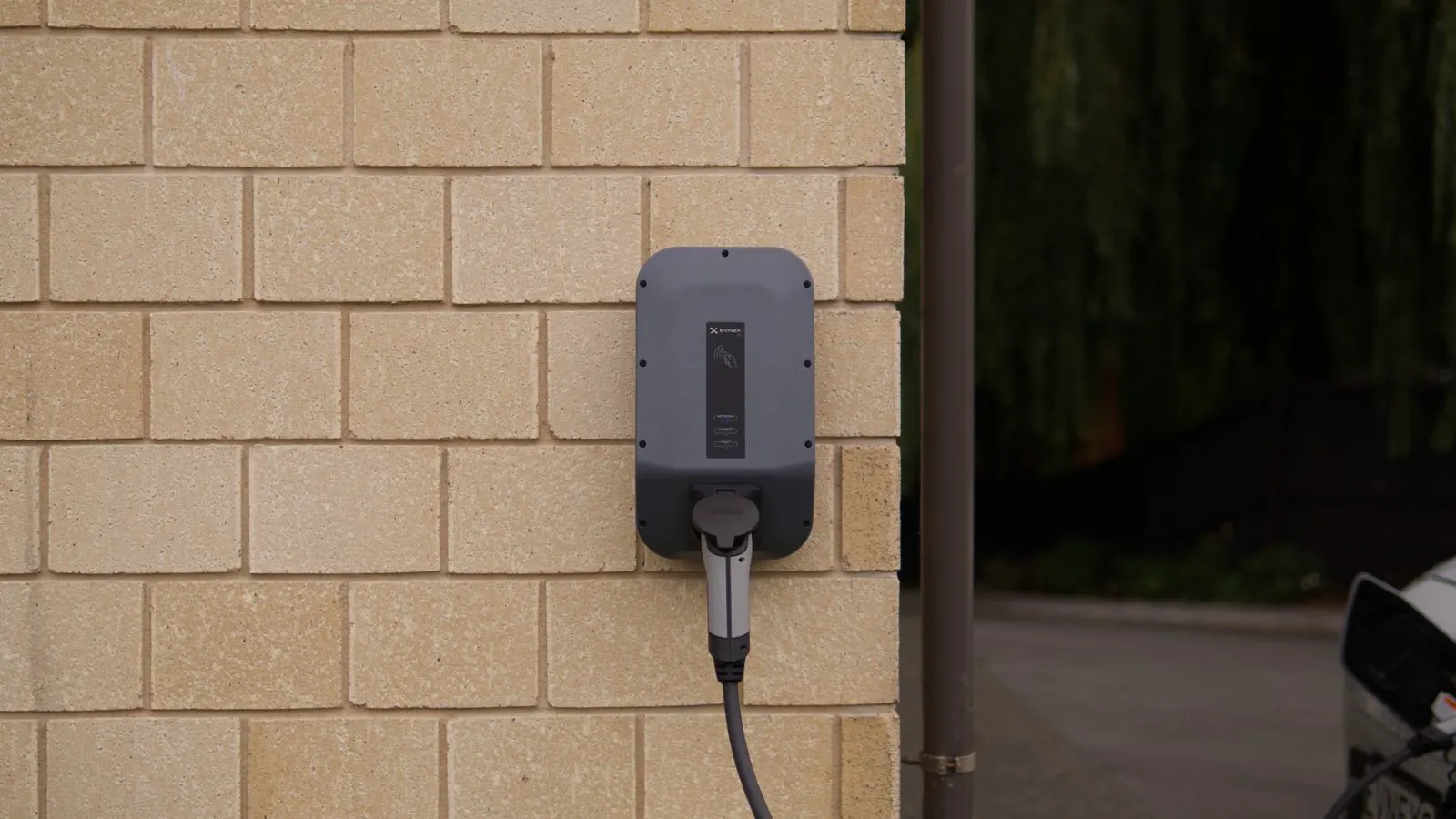
CE marking for EV chargers confirms compliance with EU safety and performance directives, such as low voltage and electromagnetic compatibility. It does not guarantee environmental durability or specific charging standards. Buyers must verify the full conformity assessment process.
- CE marking validates safety and performance under specific EU directives, not market fit or environmental durability.
- The conformity assessment process involves technical documentation, type testing, and a Declaration of Conformity.
- Buyers should verify the manufacturer's technical file and test reports before procurement.
- CE marking does not replace local installation regulations or utility interconnection requirements.
- Post-market surveillance and incident reporting remain the manufacturer's ongoing legal duty.
CE marking on an electric vehicle charger signals that the product meets the minimum safety and performance requirements set by the European Union. For buyers, this label is a gatekeeper for market access. It tells you the charger has undergone a conformity assessment process. However, the label itself does not tell you everything about the unit’s capability, longevity, or local regulatory fit.
What Directives Apply to the Charger
The CE mark is not a single test. It is the outcome of complying with multiple legal directives. For EV chargers, the main ones are the Low Voltage Directive and the Electromagnetic Compatibility Directive. These focus on electrical safety and interference. The Low Voltage Directive covers things like enclosure integrity, insulation, and protection against electric shock. The Electromagnetic Compatibility Directive ensures the unit does not emit excessive radio frequency noise and can operate without interference from other devices.
A charger might pass electrical safety tests but still fail if its enclosure allows moisture into the electrical compartment. Conversely, a unit with a sealed enclosure might emit too much noise, causing it to fail electromagnetic compatibility checks. The CE process requires the manufacturer to test against these specific technical harmonized standards.
The Conformity Assessment Process
Getting the CE mark requires a documented process. The manufacturer creates a technical file. This file includes design drawings, material specifications, and test reports. They then conduct type tests. This means taking a representative sample of the charger and running it through a certified testing lab.
The lab checks the unit against the harmonized standards. For a typical AC charger, this involves checking the contactors, the control board, and the external cabling. For DC fast chargers, the tests are more complex. They include high-voltage isolation tests, thermal derating checks, and communication protocol verification.
After testing, the manufacturer issues a Declaration of Conformity. This is a legal document. It states the model number, the applicable directives, and the test standards used. It also identifies the responsible person. In the EU, this person is often the manufacturer or their authorized representative.
What CE Marking Does Not Cover
The CE mark is often misunderstood as a universal quality seal. It is not. It does not verify that the charger will charge a specific vehicle model efficiently. It does not confirm the unit is suitable for outdoor installation in coastal or snowy climates unless those conditions were part of the test profile.
A common mistake is assuming that CE marking covers IP ratings. While IP ratings are often tested as part of safety, the CE directive itself does not mandate a specific IP rating for all chargers. A unit can have a CE mark and an IP44 rating, or a CE mark and an IP66 rating. The buyer must check the technical data sheet for the specific environmental rating.
Another gap is the charging standard. CE marking does not certify that the charger supports a specific communication protocol, such as a particular version of the charging management system. It confirms the hardware is safe and compatible with the electrical grid. The software behavior for user interfaces and network connectivity is a separate layer of compliance.
Technical Documentation and Type Testing
The technical file is the backbone of the CE process. It is not a public document. It is held by the manufacturer. However, buyers can request key excerpts during procurement. You should look for the test reports. These reports show the pass/fail results for each parameter.
For example, a test report for a DC charger will show the insulation resistance values. It will also show the dielectric strength tests. These numbers are critical. If a charger shows a marginal pass on insulation resistance, it may meet the minimum standard but have a shorter expected lifespan under stress.
Type testing is done on the production model. But the manufacturer must ensure that all units produced match the tested sample. This is where quality control comes in. A buyer should ask about the incoming quality checks. Do they test every unit? Or do they test a batch sample? The CE process assumes the manufacturer controls this, but it does not guarantee it for the buyer.
EU Compliance and Market Entry
To sell an EV charger in the EU, the manufacturer must handle the administrative side of EU compliance. This includes placing the CE mark on the product, labeling the nameplate with the model and voltage, and providing user documentation in the language of the country of sale.
For professional buyers, the practical shift is in supplier vetting. You cannot just ask for the CE mark. You need to verify the manufacturer’s track record. Have they had any product recalls? Have they faced enforcement actions by national authorities? A quick check of the EU’s public database for notified bodies can reveal if a specific manufacturer has had issues with their conformity assessments.
Preparing for Procurement
When planning a procurement strategy, you should plan for several shifts in your evaluation process.
- Verify the technical file. Request the test reports and the Declaration of Conformity. Check if the standards cited are current.
- Check the environmental rating. Do not assume the CE mark covers outdoor durability. Ask for IP and temperature range data.
- Review the software compliance. Ensure the charging management system meets the local requirements for data security and user privacy.
- Confirm the warranty terms. The CE process ends at the point of sale. The manufacturer is responsible for post-market surveillance, but the buyer needs clear repair and replacement terms.
- Plan for installation compliance. The charger itself has a CE mark, but the installation site must meet local electrical codes. The CE mark does not transfer to the installation work.
Post-Market Surveillance
The CE mark is not a one-time event. The manufacturer has a duty to monitor the product after it is sold. If they receive reports of a defect, they must act. This could involve issuing a software update or recalling the hardware.
For buyers, this means the manufacturer must be a stable entity with a support channel. If a company disappears after shipping the unit, the CE mark becomes a paper trail. You need a supplier who can provide spare parts and firmware updates for the expected lifespan of the charger.
The Role of Notified Bodies
For some products, a Notified Body is required to certify the design. For many EV chargers, the manufacturer can self-declare, meaning they test and declare compliance themselves. However, if the charger has specific safety features that require third-party verification, a Notified Body must be involved.
This distinction matters for risk assessment. A self-declared product carries a different risk profile than one certified by a Notified Body. You should ask the supplier which route they took. If they self-declared, ask for evidence of the internal quality management system that supports that declaration.
| Component | CE Directive Focus | Typical Test Parameter |
|---|---|---|
| Enclosure | Low Voltage Directive | Creepage and clearance distances |
| Control Board | Electromagnetic Compatibility | Radiated emissions limits |
| Cabling | Low Voltage Directive | Insulation resistance |
| Contactors | Low Voltage Directive | Dielectric strength |
| User Interface | Low Voltage Directive | Touch voltage limits |
The table above shows a simplified view. The actual test matrix is much larger. It includes mechanical tests, thermal tests, and communication tests. The key point is that the CE process is broad but specific to safety and performance. It does not cover operational efficiency or user experience.
Final Thoughts on Verification
The CE mark is a baseline. It tells you the charger is safe to plug in and operate in the EU. It does not tell you if it is the best choice for your site. It does not tell you if the software will integrate with your fleet management system.
Your preparation should focus on the gap between the CE mark and your site requirements. Map out your specific needs. Define the environmental conditions. Specify the software integrations. Then use the CE mark as a floor, not a ceiling. The unit must be safe, but it must also be fit for purpose. The CE process ensures safety. Your procurement process must ensure fit.
Frequently asked questions
Does CE marking guarantee the charger will work with all EV models?
No. CE marking confirms electrical safety and electromagnetic compatibility. It does not certify compatibility with specific vehicle models or charging protocols.
Can I verify the CE marking for a specific charger model?
Yes. You can check the EU's public database for notified bodies and manufacturer declarations. You can also request the Declaration of Conformity directly from the supplier.
What is the difference between CE marking and UL certification?
CE marking is for the European Union market. UL certification is for the North American market. They test against different standards and directives. A charger can have both marks if it is sold in both regions.
Does CE marking cover the installation of the charger?
No. CE marking applies to the product itself. The installation must comply with local electrical codes and building regulations, which are separate from the product certification.
How long is a CE marking valid?
The CE mark is valid as long as the product remains unchanged and the manufacturer continues to comply with the directives. If the design changes, the conformity assessment may need to be repeated.