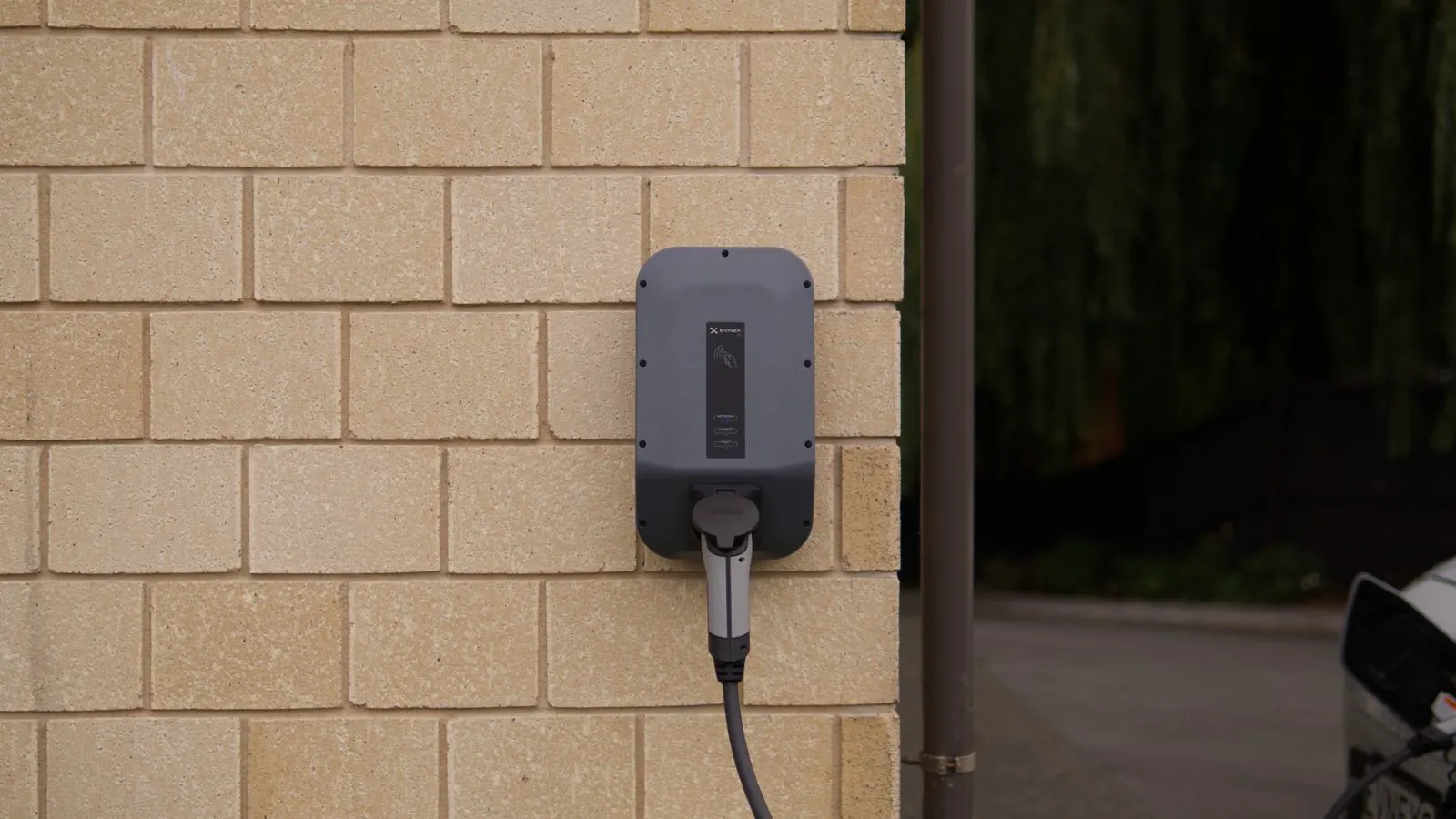
Future workplace AC charging relies on smart management to balance demand with grid capacity. This guide outlines five shifts buyers should plan for, covering load management, grid integration, hardware standardization, and data reporting.
- Smart AC charging shifts control from individual chargers to a centralized management layer.
- Load management protects grid connections by distributing power dynamically across multiple units.
- Future infrastructure requires standardization in communication protocols and hardware form factors.
- Grid integration will depend on local utility rules and demand response programs.
- Buyers should prioritize software flexibility and vendor neutrality when selecting new systems.
The shift from static to dynamic power allocation
Workplace AC charging infrastructure is moving away from fixed, one-to-one power assignments. Traditional installations treat each charger as an isolated circuit. A 22 kW unit draws 22 kW when active and zero when idle. The problem emerges when multiple chargers operate simultaneously on the same service panel. The total demand can exceed the rated capacity of the site connection, triggering overloads or requiring expensive grid upgrades.
Smart AC charging introduces a dynamic layer between the charger and the grid. A load management controller monitors the real-time consumption of each unit. It adjusts power output based on available capacity, occupancy patterns, and utility signals. If three chargers are active and the site connection is rated for 30 kW, the controller might allocate 10 kW to each unit. This approach keeps the total draw within safe limits without requiring larger transformers or switchgear.
This shift changes how buyers evaluate hardware. The charger itself becomes a node in a network rather than a standalone device. Selection criteria now include communication capabilities, software compatibility, and integration with existing building management systems. The physical hardware remains similar to current AC units, but the value proposition lies in the control logic that governs how power is delivered.
Load management as a standard requirement
Load management is no longer an optional add-on for multi-charger sites. It is becoming a baseline expectation for professional installations. The technology works by creating a virtual circuit that can be divided among multiple physical chargers. The controller ensures the sum of individual charger outputs never exceeds the total available capacity.
This mechanism addresses two primary concerns. First, it prevents overloading the electrical service. Second, it maximizes the utility of existing infrastructure. Many workplace sites have spare capacity that is not fully use due to conservative installation practices. Smart management unlocks this unused headroom, allowing more charging sessions without capital expenditure on grid upgrades.
Buyers should understand that load management is not simply about limiting power. It is about optimizing access. A poorly configured system might restrict each charger to a low baseline, reducing charge speed. A well-tuned system balances speed and reliability, ensuring users receive reasonable charge rates while protecting the grid connection. The tuning process requires understanding site usage patterns, peak demand windows, and utility constraints.
Grid integration and demand response
As grid operators seek to manage peak load, AC charging sites are becoming potential assets. Grid integration involves two-way communication between the charging system and the utility or local grid operator. This allows the charger to reduce output during peak demand periods or respond to specific demand response signals.
For workplace AC charging, this integration is often simpler than for DC fast charging. AC chargers typically run at lower power levels and can tolerate longer charge times. A vehicle left to charge overnight can absorb a reduced power profile without significant impact on user experience. This flexibility makes AC sites ideal candidates for demand response programs.
The financial implications are emerging. Utilities may offer incentives for sites that participate in demand response, or they may charge lower rates during off-peak periods. While specific programs vary by region, the trend toward dynamic pricing and grid services is clear. Future infrastructure should be capable of receiving these signals and adjusting output accordingly.
Buyers should ask vendors about compatibility with local demand response protocols. Not all systems are ready for this level of integration. Some may only support basic load management without the ability to receive external grid signals. As grid rules evolve, systems that lock out future updates will become liabilities.
Standardization and vendor neutrality
The market for smart AC charging is fragmented. Multiple vendors offer different hardware, software platforms, and communication protocols. This fragmentation creates complexity for buyers who need to integrate systems from different suppliers or upgrade existing installations.
Standardization efforts are underway to simplify this process. Common communication protocols are being adopted to ensure interoperability between chargers, controllers, and management platforms. The goal is to allow a single software interface to manage a heterogeneous fleet of chargers regardless of manufacturer.
This trend favors vendor-neutral approaches. Buyers should prioritize systems that use open standards for data exchange and control. This reduces the risk of vendor lock-in and simplifies future maintenance. If a vendor goes out of business or changes its business model, an open-standard system remains functional.
Hardware standardization is also relevant. While AC chargers share common form factors, differences in mounting options, cable lengths, and connector types can complicate installations. Standardizing these physical aspects reduces installation time and maintenance costs. Buyers should specify physical and digital standards in their procurement documents to ensure consistency across their estate.
Data reporting and utility billing
Smart AC charging generates significant data. Each charger reports energy consumption, session duration, power output, and status events. This data is valuable for operational management, but it also has implications for utility billing and energy cost tracking.
Accurate data reporting is critical for sites that need to justify charging infrastructure investments or participate in energy management programs. The data must be granular enough to attribute consumption to specific chargers and, where possible, specific vehicles or employees. This level of detail supports cost allocation and usage analytics.
Buyers should evaluate the reporting capabilities of management platforms. Look for dashboards that provide real-time visibility into charging activity and historical trends. Integration with building energy management systems is also valuable. This allows AC charging consumption to be tracked alongside HVAC, lighting, and other building loads.
Data quality is a concern. Inaccurate reporting can lead to billing disputes or mismanagement of energy resources. Vendors should provide clear documentation on data accuracy and update frequencies. Buyers should test the reporting features during the procurement process rather than assuming the software will meet their needs.
Preparation checklist for future investments
Preparing for future workplace AC charging trends requires a structured approach. The following steps help buyers align infrastructure investments with emerging technologies.
- Assess the existing electrical service capacity. Determine how much spare capacity is available on the site connection. This determines the maximum number of chargers that can be supported without upgrades.
- Audit the current charger fleet. Identify which units are compatible with centralized load management. Older chargers may lack the communication interfaces needed for smart control.
- Define communication standards. Choose a management platform that uses open protocols. This ensures interoperability with current and future hardware from different vendors.
- Evaluate grid integration options. Contact the local utility to understand available demand response programs and dynamic pricing schemes. Design the system to support these interactions.
- Plan for scalability. Select hardware and software that can handle additional chargers as demand grows. Avoid proprietary solutions that limit future expansion.
This checklist provides a practical framework for planning. It moves beyond immediate installation needs to consider the long-term evolution of the charging ecosystem.
The role of building management integration
AC charging does not exist in isolation. It interacts with the broader building infrastructure. HVAC systems, lighting controls, and elevator operation all compete for the same electrical capacity. Integrating AC charging with the building management system (BMS) allows for coordinated power management.
For example, during peak building load, the BMS might reduce HVAC output to create headroom for charging. This dynamic balancing ensures that critical building functions are maintained while supporting charging needs. It also helps the site meet its overall energy efficiency targets.
Implementation requires close collaboration between the building engineer and the charging system provider. The BMS must be configured to recognize the charging load as a controllable element. This involves defining control priorities, setting limits, and establishing communication links.
The benefits extend beyond power management. Integrated systems provide a holistic view of building energy consumption. This data supports sustainability reporting and helps identify opportunities for efficiency improvements. As buildings adopt stricter energy codes, this integration will become increasingly important.
Hardware considerations for smart AC charging
While software and management are the focus of future trends, hardware remains the foundation. The physical charger must be designed to work effectively with smart control systems. Key hardware features include adjustable power output, reliable communication modules, and robust environmental protection.
Adjustable power output is critical. The charger must be able to receive commands to increase or decrease its power draw in real-time. This requires hardware that can modulate its output smoothly without interrupting the charging session.
Communication reliability is another factor. The charger must maintain a stable connection to the load management controller. This connection may use Ethernet, Wi-Fi, or proprietary radio protocols. Buyers should evaluate the reliability of these connections, especially in environments with high electromagnetic interference.
Environmental protection ensures the charger operates reliably in outdoor or semi-outdoor conditions. Workplace AC chargers are often installed in parking structures or exterior bays. The hardware must meet appropriate ingress protection ratings and be resistant to temperature fluctuations and moisture.
Cost considerations and return on investment
The cost of smart AC charging infrastructure differs from traditional installations. Upfront costs may be higher due to the management hardware and software licensing. However, these costs are often offset by reduced utility upgrades and improved asset utilization.
The return on investment is driven by several factors. First, load management allows sites to maximize existing grid capacity. This delays or eliminates the need for expensive electrical upgrades. Second, grid integration can generate revenue or reduce energy costs through demand response participation. Third, data reporting improves operational efficiency and supports sustainability goals.
Buyers should model the total cost of ownership over a five-to-ten-year period. This includes hardware, software, installation, maintenance, and utility costs. The analysis should compare a traditional installation with a smart management approach to quantify the benefits.
While specific numbers vary by site, the general trend is toward higher upfront costs and lower long-term operating costs. The shift in cost structure requires a different evaluation mindset from traditional capital expenditure analysis.
Final thoughts on planning
The future of workplace AC charging is defined by intelligence and integration. The physical hardware will continue to evolve, but the management layer will determine the value of the installation. Buyers who focus only on charger power levels or unit prices will miss the bigger picture.
Planning for the future requires understanding how AC charging fits into the broader energy ecosystem. It is not just about plugging in vehicles. It is about managing a distributed load that interacts with the grid, the building, and the user.
The technologies described here are already available in various forms. The challenge is selecting the right combination of hardware, software, and integration services for a specific site. By focusing on standards, scalability, and data quality, buyers can position their infrastructure for the next decade of growth.
The transition to smart AC charging is not a single purchase decision. It is an ongoing process of adaptation and optimization. Sites that treat their charging infrastructure as a dynamic system will be better positioned to manage costs, meet grid requirements, and serve their users effectively.
Frequently asked questions
How much does smart load management cost compared to standard AC chargers?
Smart management systems typically add to the upfront cost of an installation. This includes the controller, software licensing, and integration work. The exact premium varies by site size and vendor, but it is generally lower than the cost of a grid upgrade.
Can existing AC chargers be retrofitted with load management?
It depends on the charger model. Some older units have communication ports that can be used to connect a controller. Newer units may have built-in support. Buyers should check vendor documentation to see if retrofitting is possible and cost-effective.
What happens if a charger fails in a load management system?
The system detects the failure and redistributes the allocated power to the remaining chargers. The failed unit is removed from the rotation, and the controller adjusts the output of the active units to stay within the grid limit.
Do I need a new electrical panel for smart AC charging?
Usually, no. The main advantage of load management is that it works within the existing panel capacity. However, if the site is severely overloaded, a panel upgrade may still be necessary to support the total number of chargers.
How long does it take to implement smart AC charging at a workplace?
Implementation time varies based on site complexity and existing infrastructure. A straightforward installation with a small number of chargers can take a few days. Larger sites with complex grid integration may take several weeks to months.