A site survey verifies physical space, grid capacity, and utility requirements before EV charger installation. This checklist covers site access, electrical load, permitting, and structural checks to prevent costly delays and ensure safe, compliant charging infrastructure deployment.
- A site survey identifies grid capacity constraints, structural limitations, and permitting requirements before equipment purchase.
- Electrical load calculations must account for existing building load, future expansion, and utility connection limits.
- Physical access, cable routing, and environmental conditions affect installation cost and timeline.
- Documenting findings with photos, measurements, and utility correspondence reduces change orders and delays.
- Early coordination with the utility and local authority having jurisdiction prevents costly rework.
Why a Site Survey Matters Before Purchase
An EV charging site survey checklist prevents costly rework. Buying chargers before confirming grid capacity and physical constraints leads to delays, utility disputes, and unnecessary equipment changes. The survey validates that the location can safely and legally support charging infrastructure.
This process sits between the feasibility stage and the procurement phase. It converts a theoretical plan into a documented, engineer-ready specification. The output is a set of verified data points. These points support load calculations, equipment selection, utility applications, and permit submissions.
A weak survey costs money. A strong survey gives you a clear path to installation. The checklist below groups items into practical themes. Each item includes a short explanation and red flags to watch for.
Electrical Capacity and Grid Connection
Start with the electrical system. The survey must confirm that the available supply can support the intended charger load. This includes the service entrance, main breaker, distribution panels, and the specific circuit path to the installation point.
Request as-built drawings from the building owner or facility manager. If drawings are unavailable, send an electrician to measure and document the existing configuration. Photograph every panel, breaker, and conduit run. Note the ampacity of each circuit and the remaining capacity.
The utility connection is the most common bottleneck. Determine whether the site has an existing metered service or requires a new connection. If a new connection is needed, identify the utility’s requirements for transformer size, voltage, and connection fees. A new connection can take months. A survey that ignores this fact will derail the project schedule.
Red flags to watch for:
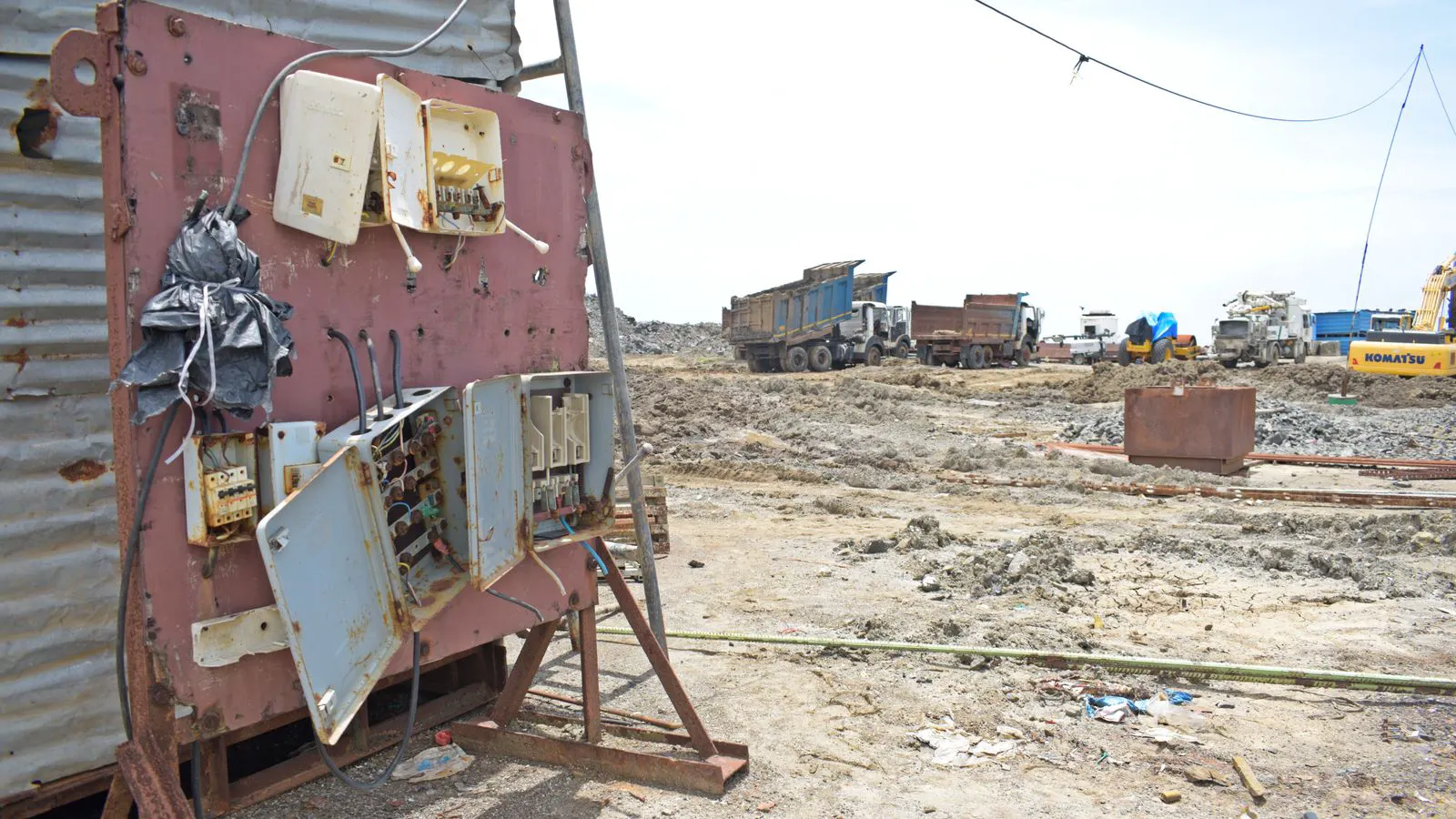
- The main service is at or near its rated capacity. Adding a DC fast charger may exceed the service limit.
- The distribution panel has no spare space for a new breaker.
- The existing wiring is undersized for the intended load.
- The utility has not confirmed availability of power at the proposed connection point.
- The site relies on a generator or backup system that cannot support continuous charging loads.
The electrical survey should produce a one-line diagram. This diagram shows the path from the utility source to the charger. It includes breaker sizes, conductor types, and protection devices. An engineer can review this diagram to verify that the design is sound.
Physical Site Assessment and Access
The physical survey examines the installation area. It covers ground conditions, weather exposure, and access for installation crews. The goal is to identify conditions that will increase labor costs or complicate the build.
Check the ground type. Poured concrete, asphalt, gravel, and soft earth all require different foundation work. A DC fast charger may need a reinforced concrete pad. An AC wallbox may only need a surface-mount bracket. The survey must confirm that the substrate can support the equipment weight and the impact of future maintenance.
Document the distance from the nearest electrical panel to the installation point. Long cable runs increase cost. They also increase voltage drop, which may require larger conductors. Measure the run with a tape measure or laser distance meter. Record the path. Note any obstacles such as columns, windows, or other mechanical systems.
Access for installation crews matters. Can a crane reach the site? Can a truck park nearby for unloading? Is there room for a work platform? If the site is in a dense urban area, access constraints may require off-hours work. This raises labor costs.
Red flags to watch for:
- The installation point is exposed to direct sunlight, rain, or snow without adequate protection.
- The ground is soft or poorly drained, requiring additional foundation work.
- The cable run is longer than expected due to architectural features.
- The site has limited access for heavy equipment.
- The installation point is near a high-traffic pedestrian area without adequate signage or barriers.
The physical survey should include a site plan. This plan shows the charger location, cable routing, utility connection point, and access constraints. It should include dimensions and a scale. A site plan gives the installer a clear reference. It reduces on-site guesswork.
Permitting and Regulatory Compliance
The survey must identify all permits and approvals required for the installation. This varies by jurisdiction, but it typically includes building permits, electrical permits, and, in some cases, zoning approvals. The local authority having jurisdiction determines what is required.
Contact the local building department early. Ask what documents they require for a charging infrastructure permit. Some jurisdictions require a stamped electrical drawing. Others require a fire marshal review. Others require a landscape plan if the charger is outdoors.
Check local codes for EV charging. Some areas have specific requirements for EV charger placement, signage, or emergency shut-off access. Some require a minimum distance from flammable materials. Some require a specific type of ground fault protection. The survey should document these requirements.
Red flags to watch for:
- The local authority has no existing process for EV charging permits. This can cause delays while the process is developed.
- The building is in a historic district or protected area. Aesthetic requirements may limit charger placement.
- The site is on a utility easement. Installation may require a utility permit in addition to a building permit.
- The installation requires a change to the building’s fire egress path. This triggers a fire marshal review.
- The site is in a flood zone. The charger may need to be installed above the flood elevation.
The permitting survey should produce a permit matrix. This matrix lists each required permit, the issuing authority, the estimated timeline, and the required documents. A permit matrix keeps the project on track. It prevents surprises during the submission process.
Environmental and Safety Conditions
The environmental survey covers conditions that affect charger operation and safety. It includes temperature extremes, humidity, dust, salt exposure, and nearby hazards. The charger must operate safely in these conditions.
Check the ambient temperature range. Chargers have operating temperature limits. If the site is in an area with extreme cold, the charger may need a heated enclosure. If the site is in a hot climate, ventilation may be required. The survey should record the maximum and minimum temperatures expected at the installation point.
Assess exposure to environmental contaminants. Coastal sites face salt spray. Industrial sites face dust and particulates. Sites near roads face vehicle exhaust. These conditions affect cable lifespan, connector wear, and electronics reliability. The survey should recommend IP ratings or protective enclosures based on the findings.
Safety is a core concern. The installation must comply with electrical safety codes. It must include proper grounding, overcurrent protection, and emergency access. The survey should verify that the site has a clear path to the nearest emergency shutoff. It should also check for nearby hazards such as water sources, flammable materials, or high-voltage equipment.
Red flags to watch for:
- The installation point is in a low-lying area that floods during heavy rain.
- The site is exposed to high humidity or salt air without adequate protection.
- The cable run crosses a water source or a wet area without proper conduit.
- The site has no clear path to an emergency shutoff device.
- The installation point is near a flammable material storage area without adequate separation.
The environmental survey should produce an environmental report. This report summarizes the conditions at the site and recommends protective measures. It supports equipment selection and warranty validity. A charger installed outside its rated environment may fail prematurely. The warranty may be void.
Utility Coordination and Connection Requirements
The utility coordination survey confirms that the grid can support the installation. This is often the most complex part of the process. It involves communication with the utility, review of technical documents, and, in many cases, a site visit by a utility engineer.
Request the utility’s technical requirements for a new connection. These requirements cover voltage, phase, transformer size, and protection devices. They also cover connection fees, application timelines, and metering requirements. A utility may require a three-phase connection for a DC fast charger. They may require a dedicated circuit for a multi-AC charger.
The survey should verify that the utility has confirmed the connection. A verbal confirmation is not enough. Request a written confirmation of availability. This document protects the project from disputes. It also supports the permit application.
Red flags to watch for:
- The utility has not completed a site visit. Without a site visit, the utility cannot confirm the connection design.
- The utility requires a new transformer. This adds cost and timeline.
- The utility has not confirmed the metering arrangement. Metering affects billing and load management.
- The utility has not confirmed the protection requirements. Protection devices must be coordinated with the utility’s system.
- The utility has not confirmed the expected connection date. Without a date, the installation schedule is uncertain.
The utility coordination survey should produce a utility confirmation package. This package includes the utility’s written confirmation of availability, the technical requirements, and the connection timeline. It also includes a copy of the utility’s site visit report. This package is the basis for the electrical design.
Documentation and Deliverables
The survey must produce a complete set of documents. These documents form the basis for equipment selection, utility applications, permit submissions, and installation. Without a complete document set, the project stalls.
The deliverables should include the following:
| Deliverable | Purpose |
|---|---|
| Site plan with dimensions | Shows charger location, cable routing, and access constraints. |
| One-line electrical diagram | Shows the power path from utility to charger. |
| Load calculation sheet | Shows the total load and available capacity. |
| Permit matrix | Lists required permits, authorities, and timelines. |
| Environmental report | Summarizes environmental conditions and protective measures. |
| Utility confirmation package | Documents utility availability and technical requirements. |
| Photo log | Records the existing site condition before installation. |
The photo log is often overlooked. It should document the existing condition of the site. Photograph the installation point, the electrical panel, the ground, and any nearby hazards. A photo log supports warranty claims and dispute resolution. It also helps the installer plan the work.
The documentation should be organized in a project file. Each document should be labeled with a date and a version number. A version-controlled file prevents confusion when changes occur. It also provides an audit trail.
Red Flags That Should Stop the Project
Some findings are deal-breakers. If the survey identifies one of these conditions, the project should pause. The cost of continuing may exceed the cost of re-evaluating the site.
- The grid cannot support the intended load. If the utility cannot provide adequate power, the charger will not operate. The site may need a different charger type or a different location.
- The site has no clear path to a utility connection. If the utility cannot reach the site without major civil work, the project is not viable.
- The local authority has no process for EV charging permits. If the permitting process is unclear, the timeline is uncertain. The project may stall for an unknown period.
- The installation point is exposed to conditions outside the charger’s rated range. If the site is too hot, too cold, or too wet, the charger will fail.
- The physical access is too restricted. If the site cannot support the installation crew, the labor cost will be excessive.
A site survey is not a formality. It is a decision tool. It tells you whether the site is suitable. It tells you what the project will cost. It tells you what the timeline will be. It tells you what risks remain.
The checklist above is a starting point. Adapt it to the specific site and jurisdiction. Involve an electrician, a civil engineer, and a permitting specialist. The survey is only as good as the people who conduct it.
Frequently asked questions
How long does a site survey take?
A basic site survey takes one to two days. A complex site with utility coordination may take two to four weeks. The timeline depends on the number of stakeholders and the complexity of the electrical system.
Do I need an engineer for a site survey?
An electrical engineer is needed for load calculations and permit drawings. A civil engineer may be needed for foundation design. A general contractor can perform physical measurements and access checks.
Can I do a site survey myself?
You can perform the physical walk and take photos. You cannot perform electrical load calculations or utility coordination without qualified professionals. The survey requires technical expertise to be valid.
What happens if the survey finds a problem?
The project pauses. The finding is documented. The team evaluates options such as a different charger, a different location, or a grid upgrade. The cost of the fix is estimated before proceeding.
How often should I update the survey?
Update the survey whenever the electrical system changes or the site conditions change. If the project is delayed for more than six months, re-verify the utility confirmation and permit status.